The Monday Morning Reality Check
Picture a typical Monday morning for a local business owner in 2026.
They've spent the weekend posting. A Reel on Friday showing behind the scenes. A carousel on Saturday with before and after photos. A story on Sunday with a poll. Combined reach: 340 people, mostly existing followers, a handful of likes, two comments from people they already know.
Monday morning, one enquiry. Maybe.
Meanwhile, across town, a competitor who hasn't posted on Instagram in three months just picked up four new customer calls before 10am. Because they rank #1 on Google Maps for the search term their customers actually type when they need help.
This isn't a coincidence. It's the difference between interruption marketing and intent marketing. And for local businesses, that difference is worth understanding.
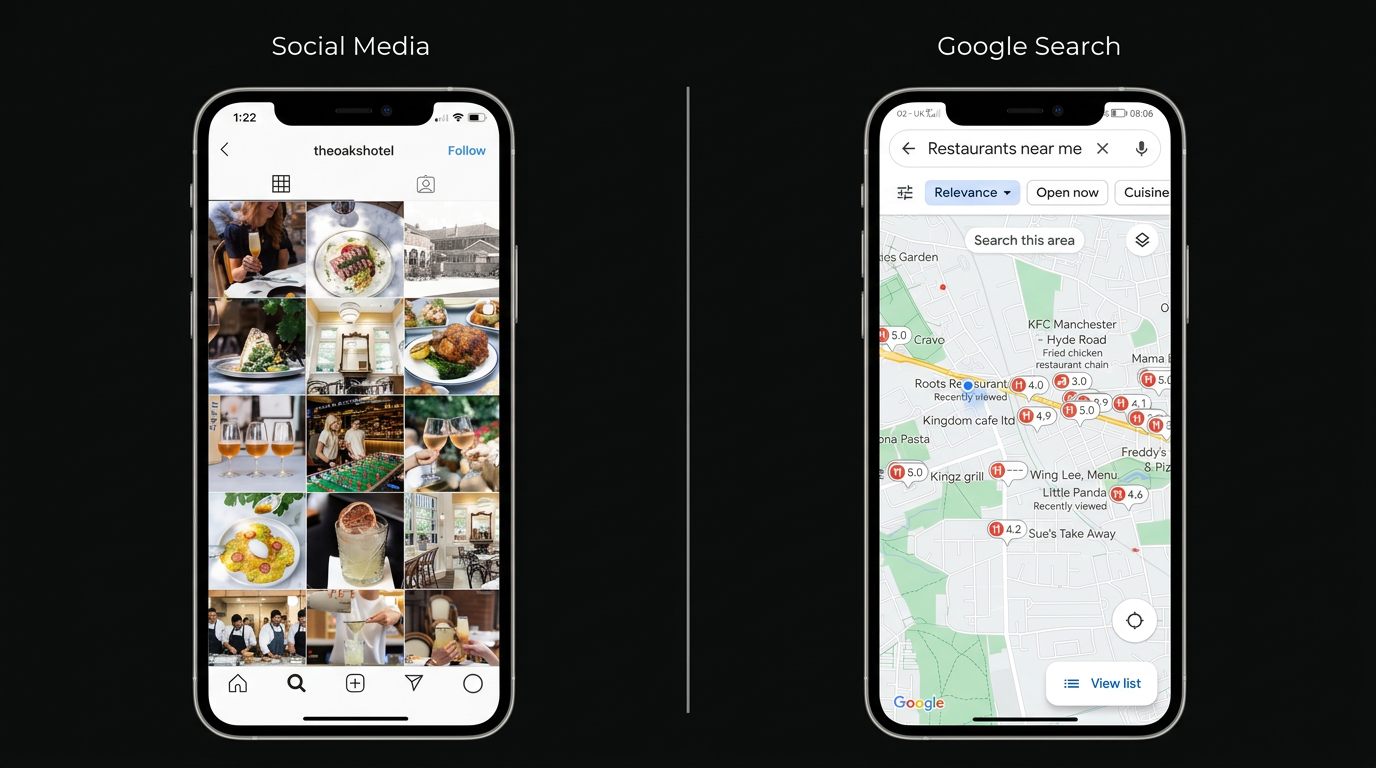
Social media reaches people who might need you someday. Google reaches people who need you right now.
The Numbers Don't Lie
Let's put some concrete figures around this because the gap is larger than most people realise.
The average Instagram business account reaches between 5% and 10% of its followers with any given post. For a local business with 1,000 followers — which takes months or years to build — that's 50 to 100 people seeing each post. Of those, the vast majority are existing customers or people who will never buy from you. Organic reach has been declining steadily for years as platforms prioritise paid content.
Now compare that to Google Maps. The #1 position on Google Maps captures 17.6% of all clicks for that search term. "Restaurant Cardiff" gets searched 14,800 times a month. Position 1 means 2,605 people land on your listing every single month — people who were actively searching for exactly what you offer, right now, with their wallet metaphorically open.
| Metric | Google Maps #1 | |
|---|---|---|
| Monthly reach | 50–100 per post | 2,605+ per month |
| Audience intent | Zero — scrolling | High — actively searching |
| Conversion rate | ~1% | ~10%+ |
| Content lifespan | 24–48 hours | Months / years |
The conversion rate from Google Maps traffic is also dramatically higher than social media traffic. Someone who found you by searching "dentist Cardiff" is ready to book. Someone who saw your Instagram post while waiting for the kettle to boil is not.
The Time Investment Problem
Here's where it gets painful for most local business owners.
Maintaining a credible social media presence for a local business requires, at minimum, three to five posts per week across two or three platforms. Each post needs a photo or video, a caption, hashtags, and ideally a story to go with it. That's easily five to ten hours a week for a solo operator doing it themselves.
Five to ten hours a week is 250 to 500 hours a year.
Now ask yourself: what would 250 hours of focused Google Maps optimisation, review generation, and local SEO deliver for your business versus 250 hours of Instagram content?
The answer, for virtually every local business we've worked with, is not even close. Google wins by a distance. Every time.
The irony is that most local business owners invest the bulk of their marketing time in social media because it feels productive. You can see the likes accumulating. You get comments. There's immediate feedback. It feels like something is happening.
What High Intent Traffic Actually Means For Your Revenue
Let's make this concrete with a simple comparison.
Imagine you run a plumbing business. You have 800 Instagram followers and post three times a week. Each post reaches about 60 people. Monthly social media reach: roughly 750 people, mostly existing customers.
Now imagine you rank #1 on Google Maps for "plumber Cardiff." That single keyword gets 1,200 searches a month. At 17.6% CTR you're getting 211 people landing on your listing every month. At a 10% conversion rate — conservative for high-intent local search — that's 21 new enquiries per month. At an average job value of £300, that's £6,300 in potential new revenue. Every month. From one keyword.
£6,300/month in new revenue from a single Google Maps keyword. Your Instagram account with 800 followers generates a fraction of that.
Your Instagram account, with 800 followers and consistent posting, is generating a fraction of that. Not because you're doing it wrong. Because the platform isn't designed for immediate local customer acquisition.
The Reviews Connection
There's one area where social media and Google intersect — and it's worth understanding because it changes how you should think about both.
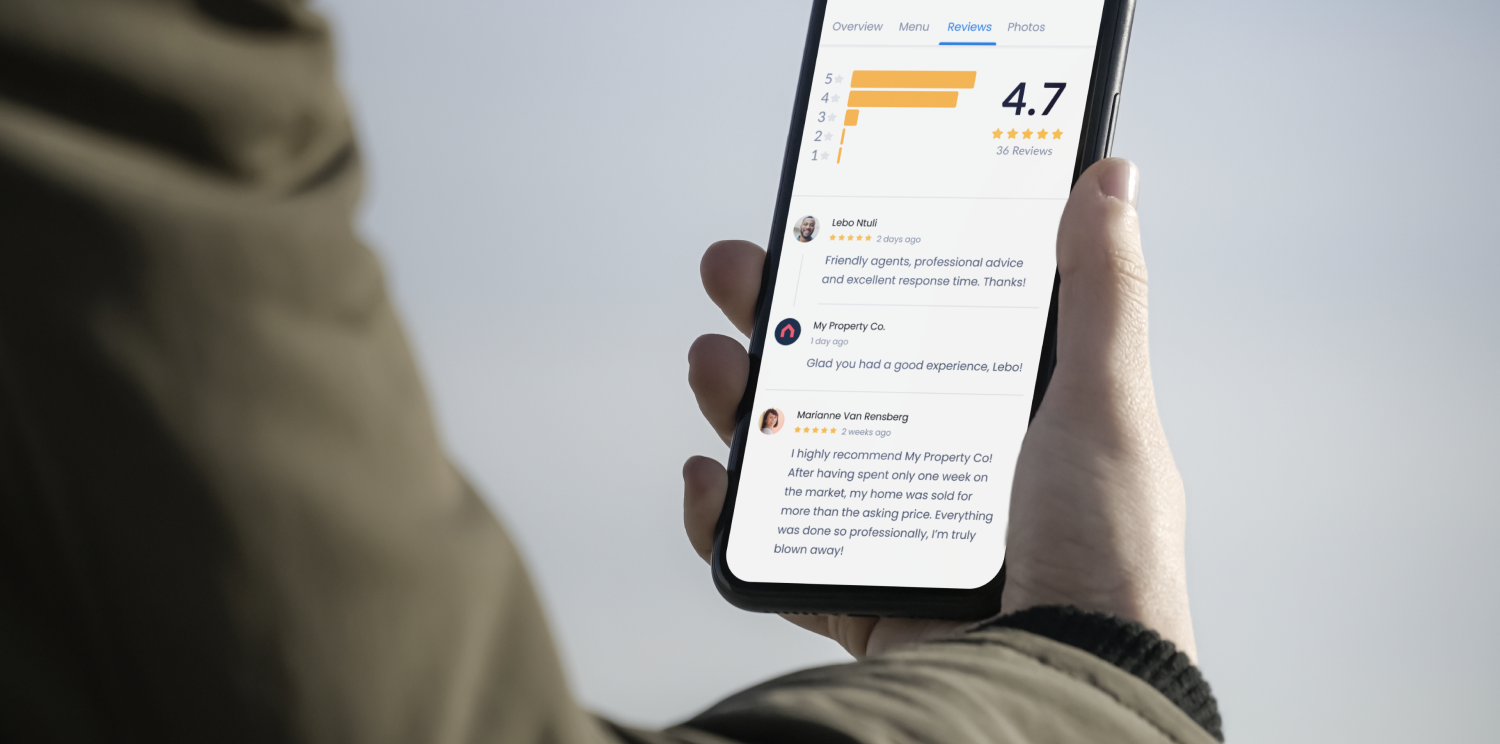
Google reviews are the single most powerful lever for local search rankings. More reviews, higher ranking. Higher ranking, more clicks. More clicks, more customers.
And where do people often go to check reviews before making a decision? Sometimes Google directly. But also Facebook, Instagram comments, and other social platforms — not to find you, but to validate you once they've already found you on Google.
This means social media has a role. But it's a supporting role, not the lead. Google gets the customer to your door. Social media reassures them they've made the right choice.
Build your Google presence first. Use social media to reinforce it.
What To Do Instead
We're not saying abandon social media entirely. We're saying rebalance your time investment to reflect where the return actually comes from.
If you're spending 80% of your marketing time on social and 20% on Google, flip it. Or at minimum, get to 50/50.
Specifically, the activities that will generate the highest return for a local business in 2026 are:
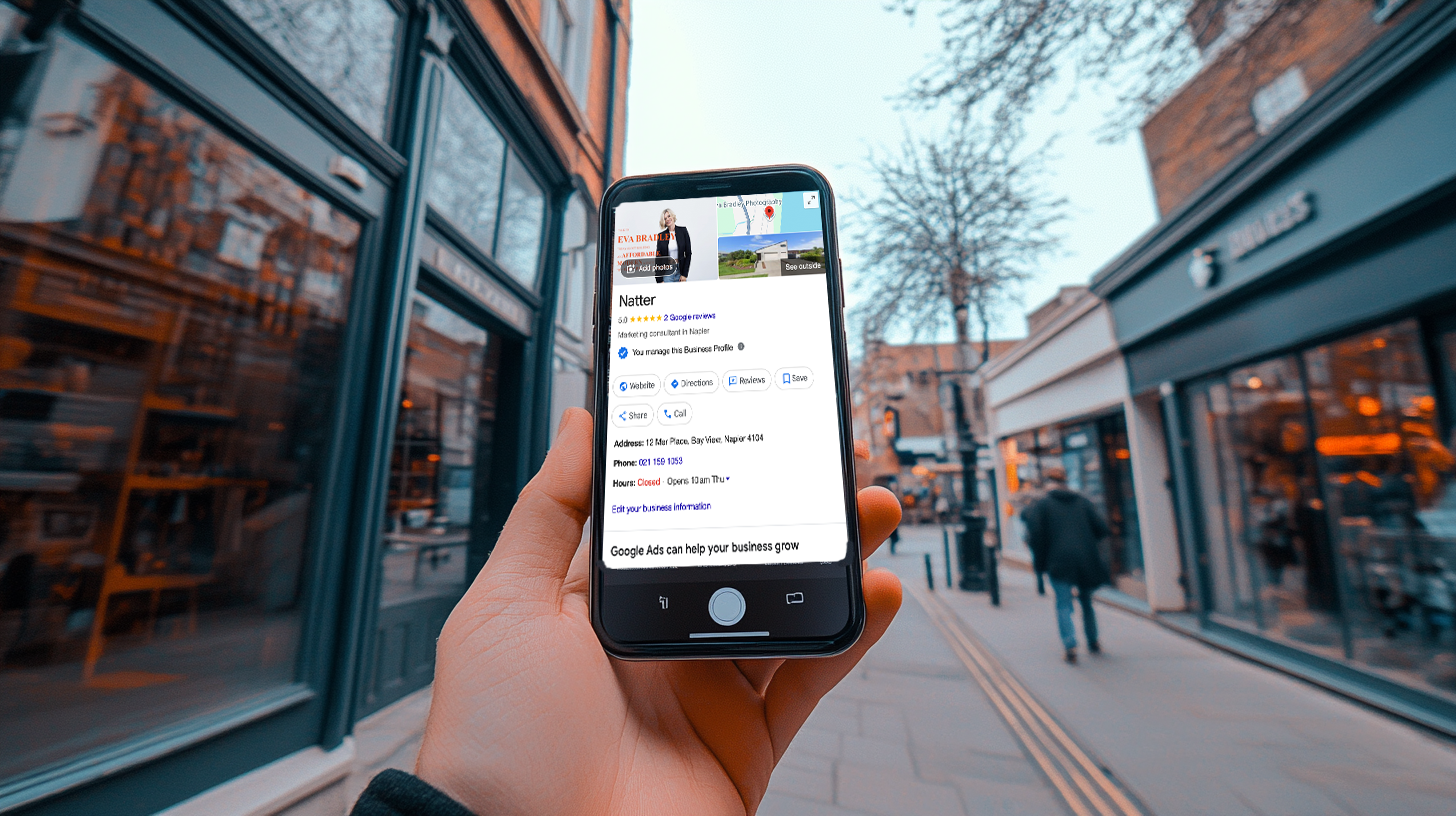
- •Getting your Google Business Profile fully optimised — categories, services, photos, opening hours, Q&A. This is free and most local businesses have a profile that's 40% complete.
- •Building your Google review count systematically. Not by asking customers manually and hoping they follow through. By using an automated system that asks at exactly the right moment, every time, without you lifting a finger.
- •Ranking in the Google Maps top 3 for your primary search terms. This is where the serious traffic lives. The top 3 positions capture 48% of all local search clicks combined. Below that, you're fighting for scraps.
- •Building location-specific pages on your website that target the areas you serve. Each page is another opportunity to rank for a local search term.
The Honest Summary
Social media is a brand tool. Google is a revenue tool.
Both have a place in a complete local marketing strategy. But for a local business owner with limited time and budget, the order of priority is clear.
Get found on Google first. Build your reviews. Rank in the Map Pack. Then, once that machine is running and generating customers consistently, add social media as the layer that reinforces your credibility and keeps existing customers engaged.
The businesses that get this right stop wondering where their next customer is coming from. They know exactly where they're coming from — and they know the system is working whether they posted on Instagram this week or not.
Want to see what ranking in the Google Maps top 3 could be worth for your business specifically?
Use our ROI calculator or start your free 14-day trial — no card, no contract, results in 48 hours.